Arboris Attends the 2026 Australia–China Business Summit and Engages on Robotics and Technology Translation
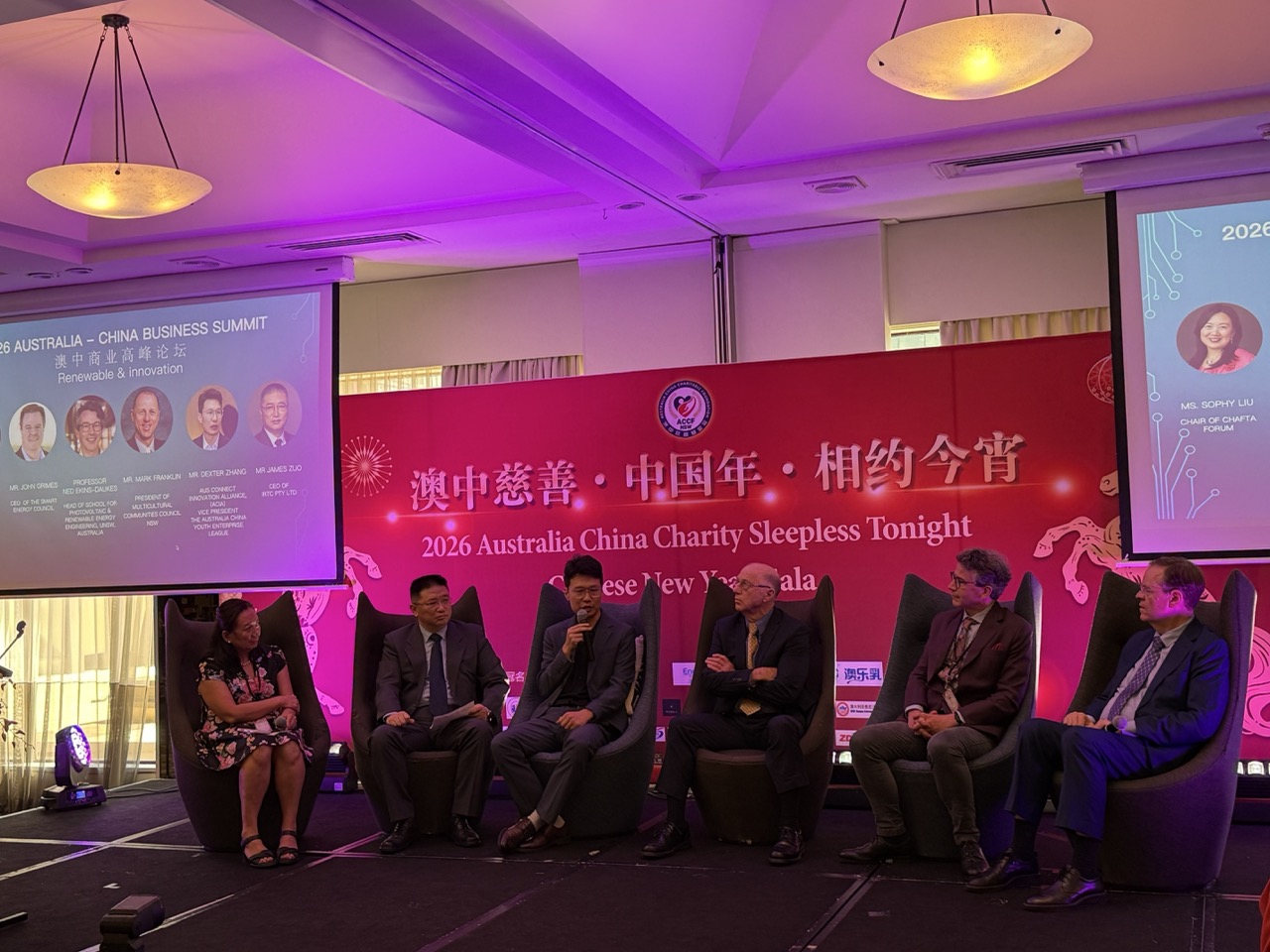
Scene from the 2026 Australia–China Business Summit
On 20 Feb 2026, Arboris Global Partners attended the 2026 Australia–China Business Summit at QT Canberra and took part in the on-site discussions. The forum was organised around industrial cooperation, innovation, and business connectivity, with a programme that combined sector depth with a cross-border perspective.
The agenda centred on two main tracks: Renewable & Innovation and Real Estate and Construction. The first addressed energy transition, innovation capability, and technology application, while the second extended into capital, construction, and urban-development logic. Robotics, renewable energy, real estate, and construction all formed part of the discussion framework, and the mix of participants across industry, academia, and business gave the programme a clear industrial orientation.
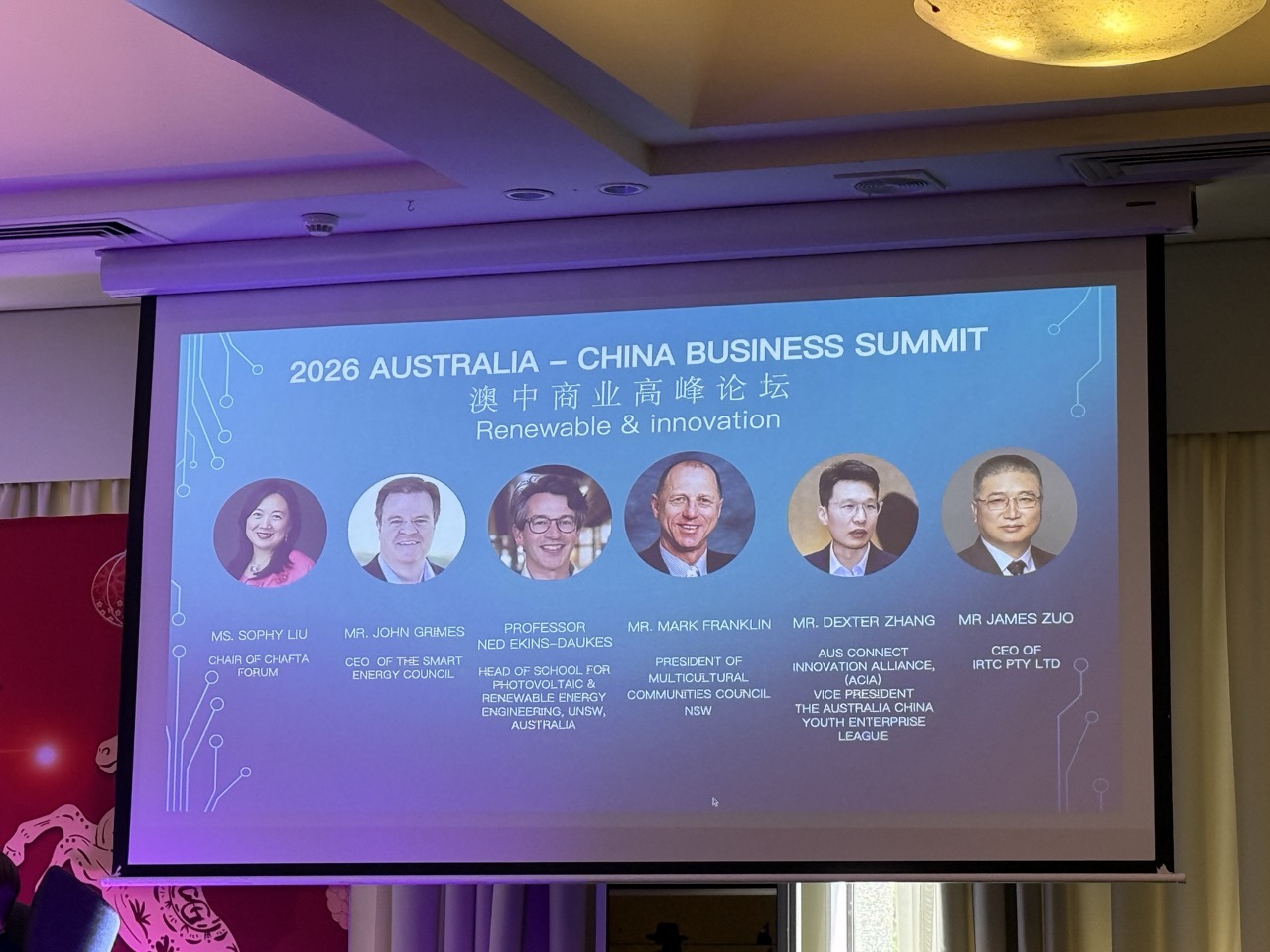
Panel discussion from the summit’s Renewable & Innovation track
One of the more consequential themes was the practical role of robotics and advanced manufacturing as vehicles for technology translation. Australia’s National Robotics Strategy treats robotics as a tool for improving productivity, supporting advanced manufacturing, and strengthening industrial competitiveness, while also identifying capital intensity, upfront costs, supply-chain capacity, and geography as real constraints on wider deployment. That places robotics in Australia not as a purely conceptual theme, but as a concrete industrial question linked directly to upgrading, commercialisation, and engineering capability.
Viewed through that industrial lens, the relevance of robotics lies not only in the technology itself, but in how it connects energy, manufacturing, software systems, deployment scenarios, and capital allocation into a more integrated translation chain. Queensland’s manufacturing strategy similarly places automation, digitisation, and advanced-manufacturing capability among its priorities. The underlying question, therefore, is not whether the technology exists, but how research capability, engineering validation, and point applications can move toward broader industrial deployment and commercial conversion.
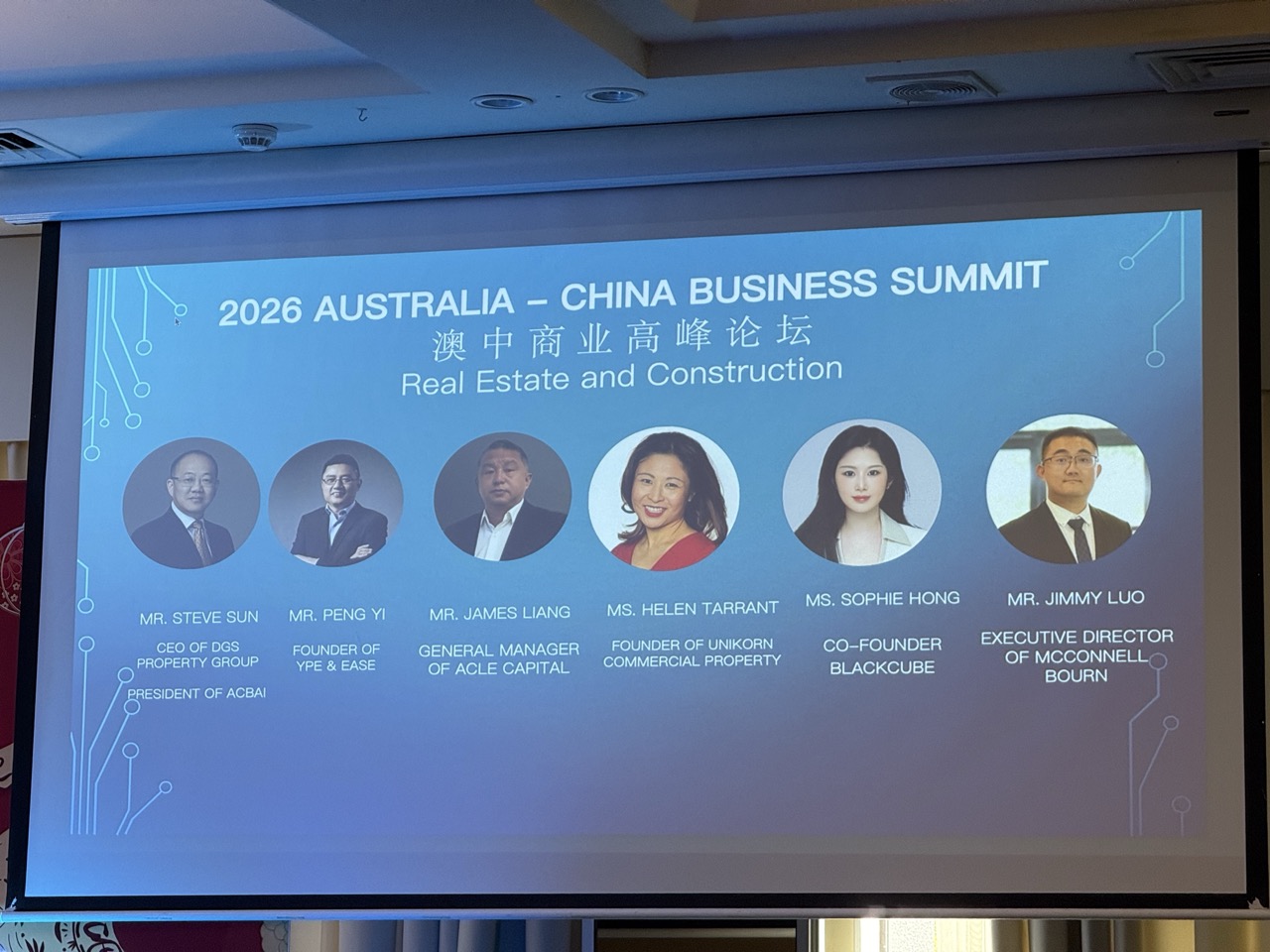
Agenda screen for the Real Estate and Construction track
The forum’s discussions on energy and innovation provided a useful frame for that question. The programme covered participants from energy, engineering, and industry backgrounds, suggesting that the emphasis was not on isolated technologies in abstraction, but on how shorter pathways can be built between research, industry, and market application. In that logic, robotics sits not at the margin, but at a key intersection with renewable energy, intelligent manufacturing, industrial software, and productivity improvement.
The significance of this type of forum lies not only in identifying the themes attracting market attention, but also in clarifying which issues possess the structural conditions for deeper cross-border coordination. Robotics fits that description. On one side, it connects Australia’s research capability, engineering standards, and application environments; on the other, it connects broader manufacturing capacity, capital organisation, and market demand. The substantive question is not any single showcase or event moment, but whether technology, capital, and industrial demand can be organised into executable cross-border translation mechanisms.
Over a longer horizon, the significance of robotics for Australia–China business engagement is not limited to the idea of “new technology.” More fundamentally, it concerns the reshaping of productivity, labour structures, manufacturing efficiency, and the boundaries of industrial capability. Australia’s policy focus on robotics and automation is, in that sense, part of a broader redefinition of its industrial-upgrading pathway. Any cross-border collaboration that seeks to matter in that setting will need to rest on sharper industrial understanding, stronger professional judgement, and clearer execution architecture.
Arboris will continue to follow developments across robotics, advanced manufacturing, energy transition, and related industrial-investment themes in Australia, and to remain in dialogue with market participants across different fields in support of the firm’s ongoing assessment of cross-border collaboration, structured execution, and long-term value formation.
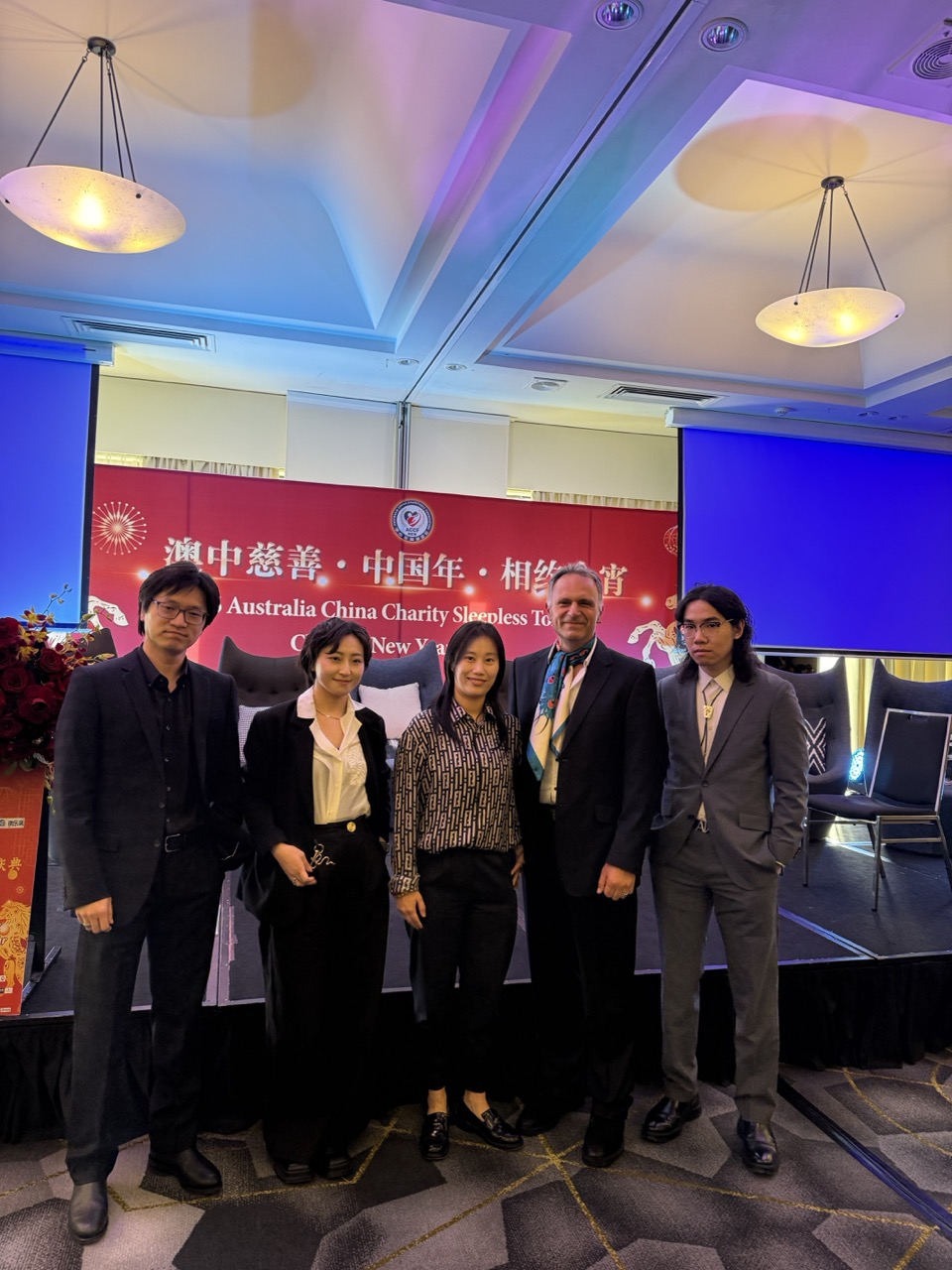
On-site exchange and group photo with participants
About Arboris
Arboris is a Singapore-headquartered capital strategy and advisory platform serving professional and institutional clients across wealth management, asset strategies, fund platforms, family-office governance, and capital structure and planning. The firm draws on experience in Australian real-estate credit and Asian secondary private markets, with an approach grounded in prudence, discipline, and trust.